
Over the last thousand years, The Land of Oak & Iron has been shaped by people making use of its abundant natural resources, from medieval corn mills to 300 years of iron and steel making.


Built Landscapes

Brickworks
At the beginning of the C19th, brick layers working in the close vicinity of towns were also brickmakers and burned lime for mortar: they operated under licence to dig for clay and sand and burn bricks. In rural areas, a brickmaker would be brought in under contract usually for a local landowner. He dug the clay, hand moulded the bricks and burned them in deep in a clamp kiln and then moved on to another district. By the 1860s brick makers had largely settled into more permanent sites due to the introduction of steam powered brick making machinery and those brickyards close to railway sidings used the railway for distribution.
The number of brickworks correspondingly increased with the expansion of the coal iron and engineering industries. The building boom connected with the rise of the industrial towns lasted from the 1870s to 1914: by then, there were about 250 brickyards in operation in the North East, with several major companies, notably Cowen’s, in The Land of Oak & Iron, many of them attached to mines, from Consett to Crawcrook.


Coal & Waggonways
The coal mining industry can be traced as far back as 1320 with mining at Whickham followed by Winlaton. By the early 16th century this was joined by mining operations in Stella and Chopwell. The Tyneside coal trade almost quadrupled between the late 1560s and the late 1590s.
By the end of the 17th century, as the easily worked seams were exhausted, the focus of development shifted to the development of waggonways to be able to transport coal extracted from seams on the Upland slopes of the Derwent Valley. Waggonways came to dominate the project area with routes running along many of the valley ridges.
Although the waggonways were mainly used to take coal from the collieries to the staithes; they were also used for other industrial transport (lead, iron and ironware). The coal industry continued to expand geographically through the early 18th century. West Durham coal was especially suitable for coke-making, long multiple banks of beehive coke ovens were a particularly common feature of the local collieries; a section survives at Whinfield.

Sword Making
Some of the world’s finest swords were produced at Shotley Bridge in the 1700s. After 1691, highly skilled German sword makers left their homeland for reasons which are still a mystery. They settled in the Derwent Valley, which was rich in the natural resources they needed to practise their trade. Hollow-bladed Shotley Bridge swords soon became famous around the world. Their blades were so flexible that the swords could be bent until the tip touched the hilt!
Industrial Sites

Allensford Blast Furnace
Venture into the woods opposite Allensford Country Park to discover a hidden relic of the industrial past. The blast furnace was used around 1700 and is the earliest surviving ore roasting furnace in Britain; once extracted, the iron was sent to a steel forge further downstream, which supplied the Shotley Bridge sword makers.
Enjoy a beautiful walk from the furnace along the Northumberland side of the river Derwent to Shotley Bridge, look out for the Crown & Crossed Swords, and Cutlers’ Hall Road, reminders of the swordmaking industry, which thrived here.
Find the Furnace:
Park at Allansford country park and walk towards the A68, cross the river on the A68 road bridge heading towards Northumberland. Walk past the cottages on the right, take the public footpath immediately on the left of the drive which goes behind the cottages. Follow this through the woods for about 400m, the steps down will be on your right.

Crowley Ironworks & Derwentaugh Coke Works
Derwenthaugh Park is a great place for a walk or bike ride with the whole family, climb to the top of Kite Hill and admire the views up the valley, across Nine Arches Viaduct.
Imagine how this looked in the 18th century when Crowley ironworks was employing over 1500 men and was once the largest ironworks in Europe. Explore the park and find Crowley’s dam and mill race, the original core of the ironworks, now all that is still visible of this internationally important manufacturing complex.
Consett Iron Company later opened Derwenthaugh Coke Works coking plant on this site, it was closed and demolished in the 1980’s


Derwentcote Steel Furnace
Discover the story of cementation, a process which converted wrought iron to steel, at Derwentcote Steel Furnace, one of the few remaining examples of this type of furnace nationally.
The furnace was built in the 1730s, it was later redeveloped as a steel-rolling mill and crucible steelworks before going out of use in 1891. The furnace was restored by English Heritage in 1990; see for yourself the remains of several workers cottages which were excavated on Time Team but remain derelict.


Path Head Water Mill
A great day out for the whole family, this hidden gem includes a restored water wheel set in beautiful surroundings adjacent to the Blaydon Burn Nature Reserve.
See how water power is harnessed to work machinery, find out why water being lifted up hill makes a knocking sound or become part of a sun dial. Explore the gardens, chill out on the island, count the many different names on the brick path or walk around the UK coastline in less than a minute!
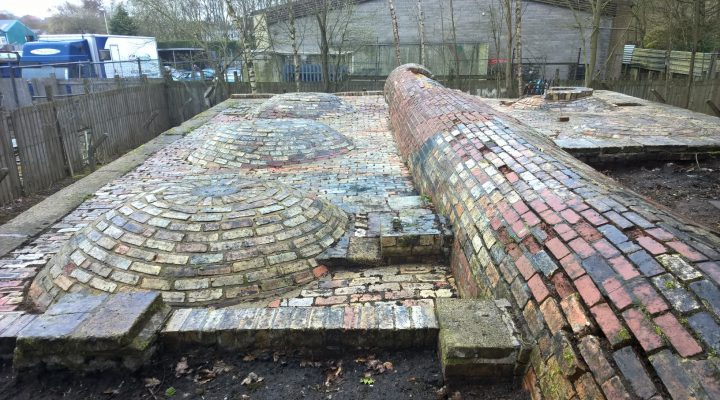

Whinfield Coke Ovens
There were once 193 beehive coke ovens, built in 1861 by the owners of the Victoria Garesfield Colliery to produce coke from coal mined at Victoria Garesfield and Watergate Collieries; they were the last to operate in Britain until 1958.
There are only five complete and two partial ovens if you go and look today, see how many different bricks you can find as you walk around – are there any from near where you live?The coke ovens sit within Strother Hills, a beautiful woodland to explore, with a footpath link into Chopwell Wood at Victoria Garesfield. Opening times: daylight hours, seven days a week.


